Designing Low-Maintenance Gardens for Aging in Place
Struggling to keep up with your garden as you age? Learn how we redesign landscapes for aging in place so you keep the plants you love with far less work.
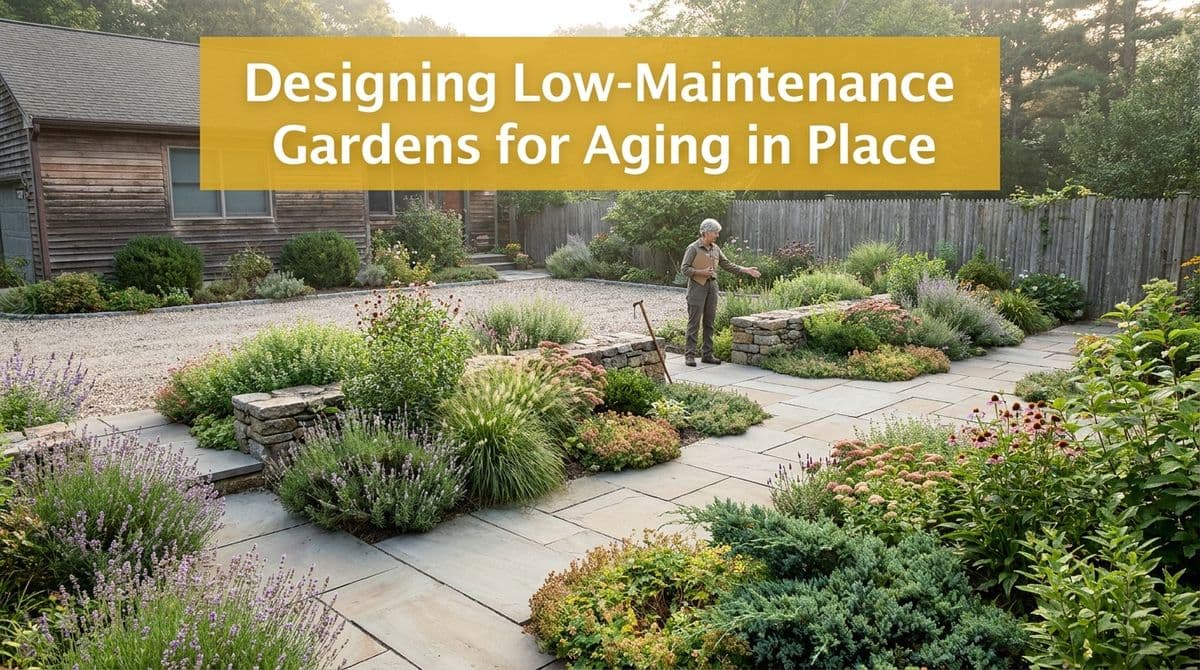
When Your Garden Becomes More Work Than Joy
We recently got a call from a customer — let's call her Diane — who reminded us exactly why we do what we do.
Diane and her husband are in their 80s. They’ve both had injuries, and the gardens they once loved had quietly turned into a source of stress. She told us, “We’re kind of in a predicament with our gardens… we just can’t take care of them the way we used to. I love to be out with my plants, but now I can’t.”
Like a lot of lifelong gardeners, she didn’t want to give everything up. She loved her plants. But the weeding, bending, and hauling were getting to be too much. She’d seen neighbors with simple stone beds and shrubs and wondered if we could help her do something similar — just with a lot less work.
If that sounds like you or a loved one aging in place, we’ll walk you through the same approach we talked about with Diane: how to simplify your landscape without giving up the plants you love.
Start With a Walk-Through and a Reality Check
When we visit a property like Diane’s, we don’t start by ripping everything out. We start with questions:
- Which plants do you absolutely love? (Memories, favorite blooms, plants you still notice every day.)
- Which areas give you the most trouble? (Usually the worst weed patches or far corners.)
- How much time and energy do you realistically have? (Per week or per month.)
- What’s your budget? (So we can phase the work if needed.)
Diane wasn’t sure about budget at all — she’d always done everything herself. We explained that most of our landscape refreshes start in the low thousands and go up depending on scope, and that we could absolutely tackle her gardens one at a time to spread out costs. That idea alone took a big weight off her shoulders.
Decide What Stays, What Goes, and What Gets Replaced
Next, we create three simple lists:
- Keep: Healthy, meaningful, or low-maintenance plants worth working around.
- Replace: Plants that died or struggle in your conditions (for Diane, her azaleas likely didn’t survive a brutal winter).
- Remove: High-maintenance beds, fussy perennials, or anything you’re constantly trimming or rescuing from weeds.
For aging in place, we often recommend replacing fussy shrubs (like cold-sensitive azaleas in our area) with tough, low-care shrubs such as:
- Boxwood or yew: Evergreen structure, minimal shedding.
- Spirea or potentilla: Reliable bloomers, easy to trim once a year.
- Hydrangeas (hardy varieties): Big impact, relatively low fuss if sited correctly.
The goal is to keep the feeling of a lush garden while drastically reducing the hands-on work.
Use Hardscape and Groundcovers to Fight Weeds
Diane mentioned how her neighbors had decorative stone beds and “no weeds.” Rock or mulch alone isn’t magic, but combined with good prep it can make a huge difference.
Our basic low-maintenance bed formula
- Clean removal: Strip out existing weeds and excess plants, including roots.
- Edge the bed: Install strong edging (metal, concrete, or high-quality plastic) to separate lawn and beds.
- Weed barrier where appropriate: A quality landscape fabric under stone can cut down weed pressure (we’re more cautious with fabric under mulch).
- Choose your top layer:
- Decorative stone: Long-lasting, great for around shrubs, in sunny, well-drained spots.
- Shredded bark mulch: Softer look, feeds the soil, but needs topping up every couple of years.
We often combine stone with selective groundcovers, so the bed doesn’t look “sterile” but still stays easy to manage.
Raise the Plants, Lower the Bending
Aging in place is all about respecting your body’s limits. If getting down on your knees is tough, we look for ways to bring plants closer to you:
- Raise key areas: Add raised planters or taller containers near walkways, patios, or porch steps.
- Bring favorites to the front: Move must-have perennials or herbs where you can reach them from a path or sitting position.
- Widen paths: Make sure you can navigate with a cane, walker, or just a little less agility than you used to have.
This way, you still get your “hands in the dirt” moments — just without the strain.
Phase the Work So It’s Doable
Diane’s gardens were in multiple areas, and she was worried it would be “a big job.” We walked her through a phased plan, which is something we do often:
- Phase 1: Tackle the worst, most overgrown or visible bed first.
- Phase 2: Refresh secondary beds, focusing on weed control and simple plantings.
- Phase 3: Add “nice-to-have” touches like accent boulders, extra shrubs, or seasonal color in containers.
Breaking it into steps helps with both budget and peace of mind. You don’t have to solve everything in one season.
Simple Maintenance You Can Actually Keep Up With
A true aging-in-place garden should be maintainable in short, light sessions. When we finish talking with clients like Diane, we leave them with a straightforward plan, such as:
- Once a week: 10–15 minute walk-through to pull the few weeds that sneak through.
- Twice a year: Light pruning of shrubs and a quick top-up of mulch if needed.
- As needed: Ask family, neighbors, or a maintenance crew to handle heavier tasks (like trimming large shrubs or cutting back ornamental grasses).
The goal isn’t a garden that needs no care — it’s a garden that matches the time and energy you actually have now.
Ready to Simplify Without Starting Over?
If you’re looking at your gardens the way Diane was — full of plants you love but more work than you can comfortably manage — we’d be happy to help you rethink the space.
We can walk through your beds, talk about what matters most to you, suggest low-maintenance replacements, and build a phased plan that fits your budget and your body. Aging in place doesn’t have to mean giving up the garden. It just means designing it to grow with you.