New Construction Yard Prep 101 for New Builds
New build on sand and weeds? Learn how we clear, grade, add topsoil, and time your fence and grass seeding so your new construction yard starts off right.
Planning Your New Construction Yard the Right Way
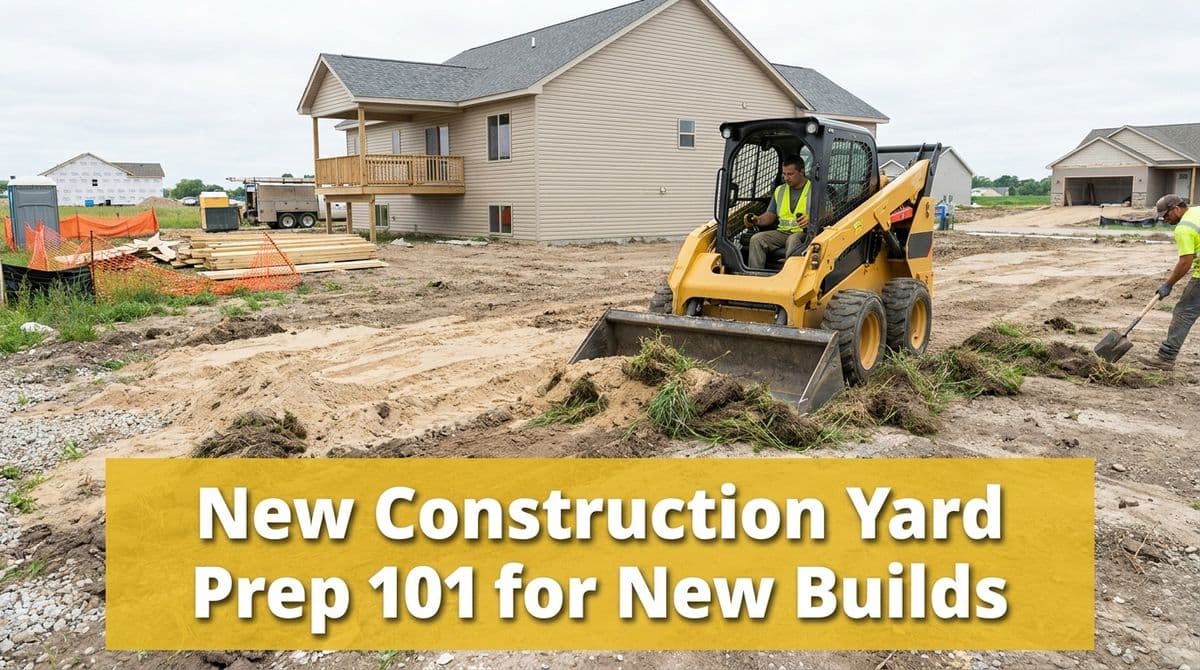
We recently got a call from a customer — let's call him Mike — who had just moved into a new build on very sandy soil. The builder had finished the house, but outside it was the typical new-construction scene: weeds, ruts from equipment, bits of construction debris, and a whole lot of uneven sand.
Mike wanted to know two main things: how to clear and grade the yard and whether he should install his fence before or after grading and seeding. He also planned to seed the lawn later in the fall and wondered how much topsoil he really needed over that sandy base.
We have this kind of conversation all the time, so we thought we’d break down how we typically approach new construction yard prep — from clearing and grading, to adding topsoil, to timing your fence and grass seed so everything works together.
Step 1: Clearing Debris, Weeds, and Construction Mess
On most new builds, the “yard” is really just a construction site that’s been abandoned. With Mike, it was the same: lots of weeds, leftover materials, rocks, and random debris in the soil. Before any grading or topsoil goes down, this all has to go.
Here’s how we usually handle that first phase:
- Walk the entire property and flag hazards: concrete chunks, nails, wire, broken blocks, etc.
- Remove large debris first with equipment and by hand so it doesn’t get buried in the grade.
- Knock down tall weeds and brush, then scrape the top layer where needed.
- Decide what stays (trees, beds, future patio areas) so we don’t grade where you’re planning hardscape.
For homeowners, a good rule is: if you can see it or trip on it now, it will be twice as annoying once grass is growing. This is the time to get it out.
Step 2: Grading for Drainage and a Smooth Lawn
Once the lot is cleared, we move into grading. With Mike, his biggest concern was just having a smooth, mowable lawn. Our concern added one more layer: drainage. You want water moving away from the house and not pooling in low spots.
When we grade a new construction yard, we look at:
- Slope away from the foundation – typically at least 6 inches of drop over the first 10 feet.
- Low spots where water might collect after a heavy rain.
- Transitions to sidewalks, driveways, and future patios so they’re smooth and safe.
For a roughly one-acre lot like Mike’s, we’ll use equipment to shape the main slopes, then fine-grade (or “rake out”) to get the surface ready for topsoil and, eventually, grass seed.
Step 3: How Much Topsoil Do You Really Need?
Mike’s property, like a lot of new builds in our area, sat on very sandy soil. He asked if we recommend adding topsoil and how much. Our answer: yes, absolutely, if you want grass that actually survives.
Sandy soil drains fast and doesn’t hold nutrients well. For seeding or sod, we generally recommend:
- Minimum 2–3 inches of quality topsoil over sandy subsoil.
- More (3–4 inches) in high-traffic areas or spots that dry out quickly.
We explained to Mike that this topsoil layer is what the grass roots will really live in. Without it, he’d be fighting thin, patchy turf and constant watering. We typically grade the subsoil first, then spread and lightly re-grade the topsoil so it follows the correct slopes.
When to Grade, When to Seed, and When to Fence
Timing Your Grading and Seeding
Mike was hoping to have everything “done” — graded, fenced, and seeded — by the end of summer or early fall. That’s a common goal and very doable with the right order.
Here’s how we suggested he think about timing:
- Grading and topsoil – Can be done mid-summer as long as the ground is workable.
- Seeding – In our climate, late summer into early fall is ideal. Cooler nights, warm soil, and more consistent moisture help seed establish.
- Spring seeding – Possible, but you’ll battle more weeds and temperature swings.
Mike already understood he couldn’t seed in the heat of midsummer and was planning on a fall seed, so scheduling grading for late July or early August worked perfectly.
Should You Install the Fence Before or After Grading?
This was Mike’s big question: the fence company might be available earlier — should he just get the fence in first? Our advice was no, and here’s why.
When we grade, we’re often changing the elevation a few inches in many areas:
- If fence posts are set before grading and we lower the soil, posts can end up looking too tall and awkward.
- If we need to add soil against a fence line, posts or panels can end up partially buried.
- Equipment access is simpler with no fence in the way.
We told Mike what we tell most new-construction homeowners:
- First: clear and grade the lot and add topsoil.
- Second: install the fence once final grade is set.
- Third: seed (or sod) after fence install, so dogs and kids stay contained as the lawn establishes.
After Seeding: Simple Maintenance to Protect Your Investment
Once the seed is down, your new yard is just getting started. We always walk homeowners like Mike through a few basic steps to keep that new lawn alive:
- Water lightly and often at first – keep the top 1 inch of soil consistently damp (not muddy) until seeds germinate.
- Switch to deeper, less frequent watering once grass is 2–3 inches tall to encourage deeper roots.
- Delay the first mow until grass reaches about 3–3.5 inches, and use a sharp blade on the highest setting.
- Stay off the lawn as much as possible the first few weeks; heavy traffic can create ruts and bare spots.
We also recommend avoiding weed control products until the lawn has been mowed at least 2–3 times. Young grass is sensitive, and patience in the first season pays off for years.
Common New Construction Yard Questions
Do I have to do everything at once?
No. Many homeowners, like Mike, start with clearing and grading only, then decide on seeding or sod later. The key is getting the grade and drainage right first; the rest can be phased in.
Can I DIY any of this?
You can absolutely handle some debris pickup and light raking yourself. For full-lot grading, drainage shaping, and hauling in several inches of topsoil, most people are happier (and safer) bringing in a crew with the right equipment.
How do I know if my yard is graded correctly?
After a decent rain, walk the property. Water should move away from the house and not sit in big puddles. If you see pooling or slopes toward the foundation, it’s worth having us take a look before you install fences, patios, or final landscaping.
Setting Your New Yard Up for Success
New construction yards can feel overwhelming at first — all sand, weeds, and debris — but with a clear plan like Mike’s, you can turn that building site into a healthy lawn in just one or two seasons. Start with a clean, properly graded base, add the right depth of topsoil, time your fence after grading, and seed when conditions are best.
If you’re staring at a raw lot and wondering where to start, we’re always happy to walk the property with you, talk through your goals, and put together a step-by-step plan that fits your timeline and budget.