Sod vs. Grass Seed for Small Backyard Projects
Redoing a small backyard and torn between sod and seed? Learn how to choose, when to plant, and what it really costs for a durable, good-looking lawn.
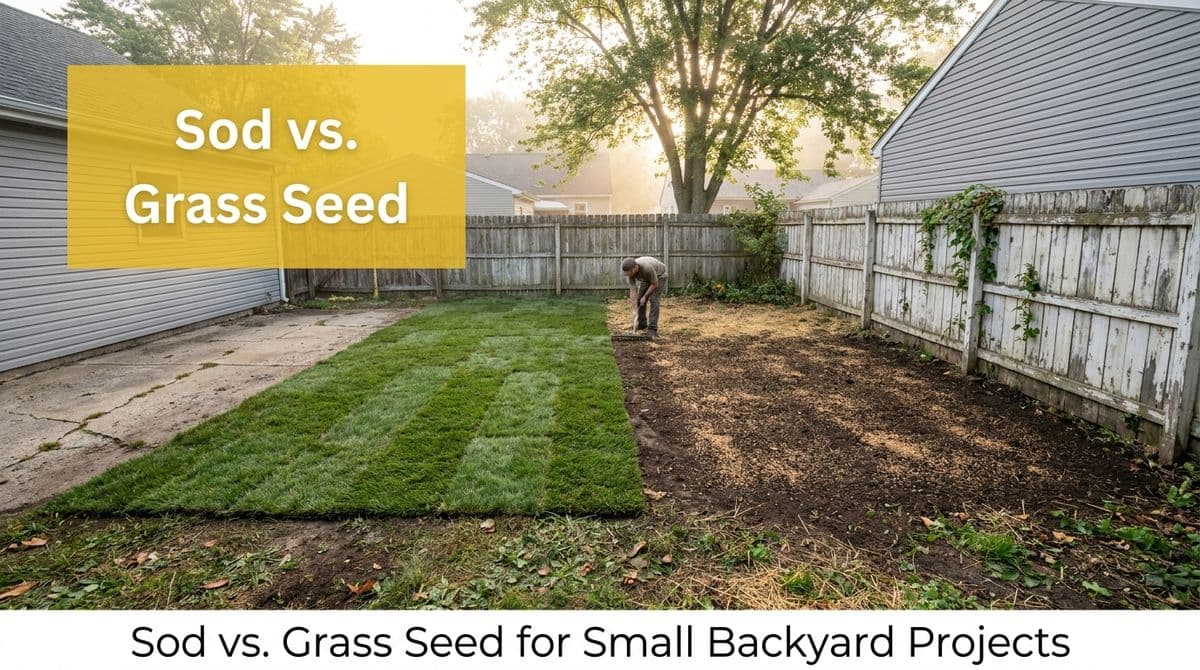
Sod vs. Grass Seed for Small Backyards: What We Tell Our Customers
We recently got a call from a homeowner — let’s call her Emily — who was redoing a portion of her backyard. She and her husband had dug out a big, weedy garden bed in the middle of the yard to create a pea gravel area for raised beds. Around that new gravel section, they had a narrow two-foot border all the way around that needed new grass.
Emily’s question was simple but very common: “For a small project like this, is sod better, or should we just use grass seed? And when should we plant so it actually takes?”
We walked her through the pros, cons, timing, and rough costs right over the phone, then scheduled a visit to take a closer look. If you’re in the same boat — small backyard project, new layout, and a bare patch of dirt — here’s the same honest breakdown we shared with her.
Sod vs. Seed: Which Makes More Sense for a Small Area?
In Emily’s case, the area was roughly a 20' x 30' space with about a two-foot grass border around a new pea gravel center. That’s not a huge lawn install, but it’s also not a tiny patch. For projects like this, both sod and seed can work — but they behave very differently.
When Sod Is the Better Choice
We install a lot of Kentucky bluegrass sod from a regional sod farm, and for many small-to-medium backyard projects, sod is usually our recommendation. Here’s why:
- Instant coverage: As soon as it’s laid, you have a full green lawn instead of staring at dirt and seed for weeks.
- Less weed pressure up front: Quality sod is grown in controlled conditions, so you’re not fighting as many weeds during establishment.
- Cleaner look around new hardscape: If you’ve added pea gravel, pavers, or beds, sod gives crisp edges and makes the project look “finished” fast.
- More forgiving on slopes and edges: Sod is less likely to wash away in a heavy rain compared to seed on bare soil.
The tradeoff is that sod is more susceptible to drying out if it’s not watered correctly early on, and it costs more up front than a bag of seed. But for most homeowners, especially first-timers like Emily, the better outcome and easier early maintenance make sod worth it.
When Grass Seed Makes Sense
There are definitely situations where we’ll steer someone toward seeding instead:
- Very small touch-ups: Bare spots, pet damage, or a few square feet can be cheaper and simpler to seed.
- Tight budgets: Seed is less expensive in material cost, though it requires more patience and care.
- Owners comfortable with extra maintenance: Seeded lawns need more consistent watering, protection from foot traffic, and more weed management in the first season.
With seed, you’re trading cost savings for more work and a longer wait. The lawn can look patchy at first, and it may take a full season (or more) before it really fills in.
Best Time to Install Sod or Seed (And When to Avoid)
Emily asked one of the most important questions: “When is the best time to plant so it actually takes?” In our climate, the answer is the same for both sod and seed: spring or fall.
Why Spring and Fall Are Ideal
We typically recommend aiming for temperatures in the 50s–60s (daytime) for new lawn establishment. In those shoulder seasons:
- The soil stays moist longer, so roots can establish without constant stress.
- The air is cooler, which reduces shock and drying.
- You’re not fighting the extreme heat and dryness of mid-summer.
For sod, this means it can knit into the soil and root more quickly. For seed, germination is more reliable and less likely to burn out.
Why Mid-Summer Is Risky
We told Emily the same thing we tell everyone: July and August are the worst times to start a lawn if you can avoid it. During those months:
- High heat and dry conditions make it harder to keep soil consistently moist.
- Sod can dry out and fail to root, especially on edges and corners.
- Seed can germinate, then burn out quickly if watering slips even a little.
Emily wasn’t in a rush, which was great. We suggested waiting for the next good spring or fall window so she’d get the best results for her money.
What It Really Costs: Sod vs. Seed for a Small Backyard
Every yard is different, so we always come out for a free estimate like we did for Emily. But here’s how we think about cost for a project like hers, with a narrow border around a central gravel area.
Typical Cost Factors for Sod
The main pieces that impact sod pricing are:
- Square footage: The number of square feet of sod you need is the biggest driver.
- Site prep: Grading, adding/leveling topsoil, and cleaning out rocks and debris.
- Access: How easy it is to get pallets of sod and equipment into the yard.
- Shape and edges: Curved borders, tight corners, and small strips around beds take more labor to cut and fit.
For many small-to-medium backyard borders, homeowners are surprised that professionally installed sod often costs less than they feared, especially compared to the time and frustration of trying to fix a failed DIY seeding attempt later.
What About Seeding Costs?
Seed itself is cheaper than sod by a good margin. But if you factor in:
- Soil prep (which you still need)
- Extra watering and time
- Potential re-seeding of thin or failed areas
the total “time and hassle” cost can end up higher than people expect. We often recommend seed when someone is okay with a more gradual, imperfect result and wants to spread the cost out over time.
How to Get Your Yard Ready for New Grass
Whether you choose sod or seed, the prep work is almost the same — and it’s where most of the success (or failure) happens.
- Remove weeds and old turf: Strip out existing grass and aggressive weeds instead of just tilling them in.
- Grade the area: Ensure water drains away from your house and doesn’t pool in low spots.
- Add and level topsoil: A few inches of quality topsoil, raked smooth, gives new roots a soft place to grow.
- Compact lightly: Light compaction or rolling helps avoid future settling but don’t pack the soil rock-hard.
When we install sod, we time the delivery so it arrives right when the soil is ready, then get it laid the same day. That’s exactly what we planned for Emily so her new grass border would establish quickly around the pea gravel beds.
Not Sure Which Is Right for You? Here’s Our Rule of Thumb
If you’re working on a small backyard project like Emily’s and wondering, “sod or seed?” here’s how we usually guide homeowners:
- Choose sod if you want an instant, finished look, lower weed pressure, and are okay with a higher upfront cost.
- Choose seed if budget is tight, you’re patient, and you’re comfortable with more watering and a slower, less-perfect start.
If you’d like us to take a look at your space, we’re always happy to come out, measure things up, talk through timing (spring or fall is best), and give you a clear estimate — just like we did for Emily. That way, you can make a confident choice and actually enjoy that new backyard instead of worrying if the grass will grow.